
Dog Lift Harnesses That Restore Back-Leg Independence (2026)
As an Amazon Associate we earn from qualifying purchases. Some links are affiliate links; buying through them costs you nothing extra. This content is informational and is not a substitute for advice from your veterinarian.
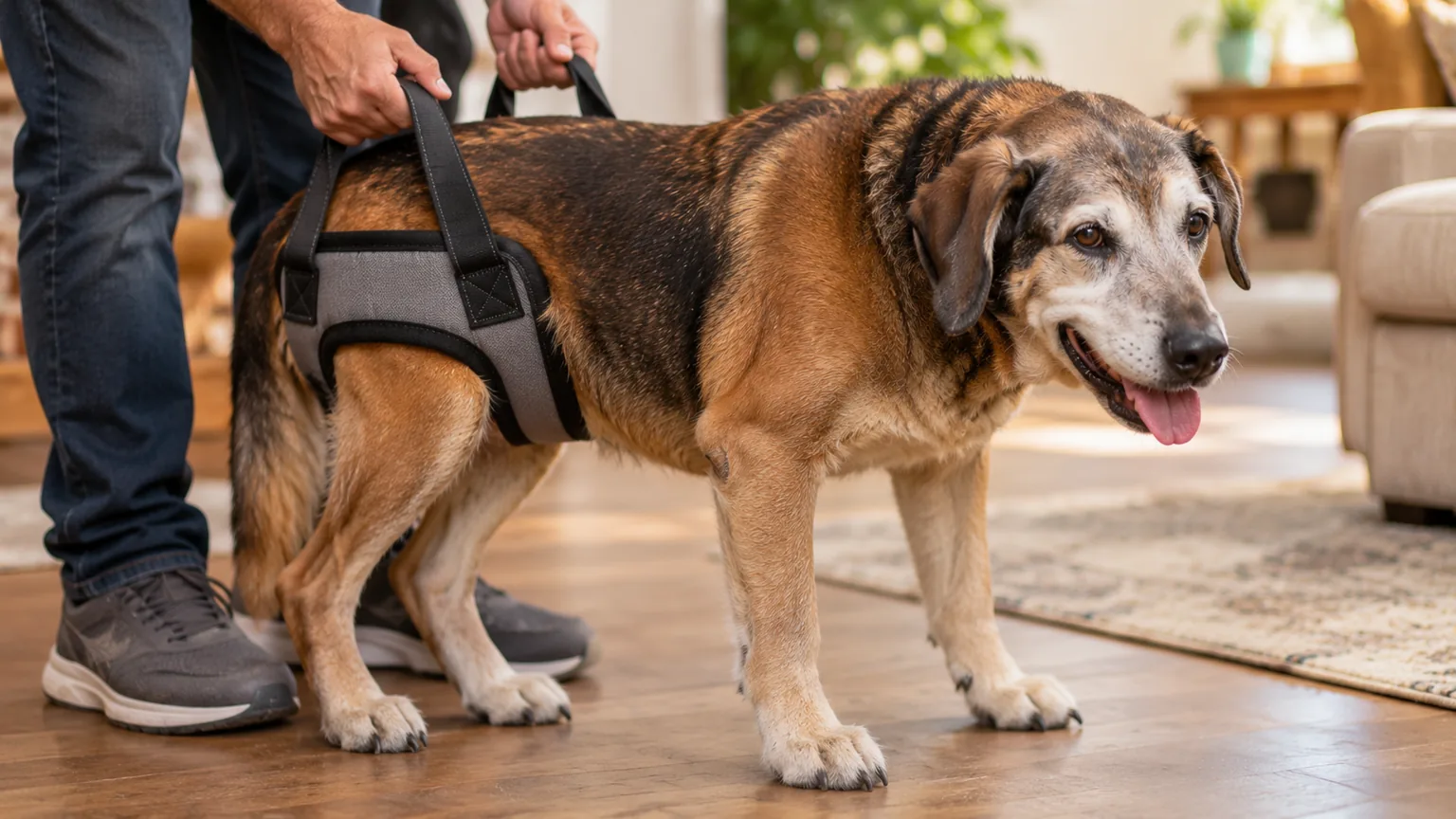
Watching a dog who used to bound up the stairs struggle to get their back end off the floor is one of the hardest parts of the grey-muzzle years. A lift harness changes that — not by doing the work for them, but by giving them just enough support to do it themselves. For a senior dog that’s weak in the rear, a padded rear-support sling or lift harness lets them stand, walk, and climb with your help, protecting their joints and your back while keeping their dignity intact.
I’m a dog owner who’s used these through a dog’s last couple of years, not your vet. Sudden back-leg weakness or dragging can signal a treatable spinal or neurological issue — get a vet exam before you assume it’s “just age.”
Which type your dog needs
- Rear-support sling — a padded strap under the hips with a handle on top. Best when only the back legs are weak. Quick to put on, easy for stairs and potty trips.
- Full-body harness — handles over both the shoulders and hips. Best for a dog who’s unsteady front and back, post-surgery, or large enough that you need two points of control.
- All-day harness vs. occasional sling. If you’re only helping now and then, a simple sling is fine. If your dog needs support every time they get up, choose a padded, breathable harness they can wear comfortably for longer.
What to look for
| Feature | Why it matters |
|---|---|
| Wide, padded straps | Spreads the load so it doesn’t dig into the belly or groin |
| Sturdy top handle | Lets you lift with your legs, not your dog’s spine |
| Right size & adjustability | A loose sling slips; a tight one chafes — measure first |
| Breathable, washable material | It’ll see mud, rain, and accidents |
| Doesn’t block potty | Essential for a dog who needs help to go outside |
Our picks
GingerLead Dog Support & Rehabilitation Sling
A padded rear sling with a built-in leash — designed so it won't interfere with potty breaks. The go-to for back-leg weakness and post-op recovery.
Full-Body Lift Harness with Front & Rear Handles
Two sets of handles for a dog that's wobbly all over or needs help on stairs and into the car. More control when a rear sling isn't enough.
Using it kindly
Fit it when your dog is calm, and let them wear it loose for a few minutes with treats before you ever lift. When you do lift, take the weight with the handle and your own legs — you’re steadying and sharing the load, not hoisting the whole dog. Go at their pace on stairs, and let them set their own feet down. The goal is help that feels like partnership, not being hauled around.
The bottom line
A good lift harness is one of the most dignity-preserving tools for a senior dog with a failing rear. Start with a padded rear-support sling like the GingerLead for back-leg weakness, and step up to a full-body harness if your dog is unsteady all over. Combine it with a ramp instead of stairs, sure footing, and a daily joint supplement, and you give your dog back the thing they miss most: getting up and going where they want on their own four feet.
Prices and availability change — Amazon shows the current price when you click through.
Frequently asked questions
What is a dog lift harness used for?
It lets you support part of your dog's weight — usually the back end — so a dog with weak rear legs can stand, walk, do stairs, or get into a car without you straining their joints or your back. It gives both of you the help without the indignity of being carried everywhere.
Rear-only or full-body support harness?
If the weakness is just in the back legs, a rear-support sling is simpler and easier to put on. If your dog is wobbly front and back or recovering from surgery, a full-body harness with front and rear handles gives more control.
Can I use a towel instead of a lift harness?
A rolled towel under the belly works in a pinch, but it slips, digs in, and is awkward for stairs. A padded harness spreads the load, stays put, and is far kinder for daily use — worth it if you're lifting more than occasionally.