
Dog Ramps vs. Stairs: What's Safer for an Aging Dog? (2026)
As an Amazon Associate we earn from qualifying purchases. Some links are affiliate links; buying through them costs you nothing extra. This content is informational and is not a substitute for advice from your veterinarian.
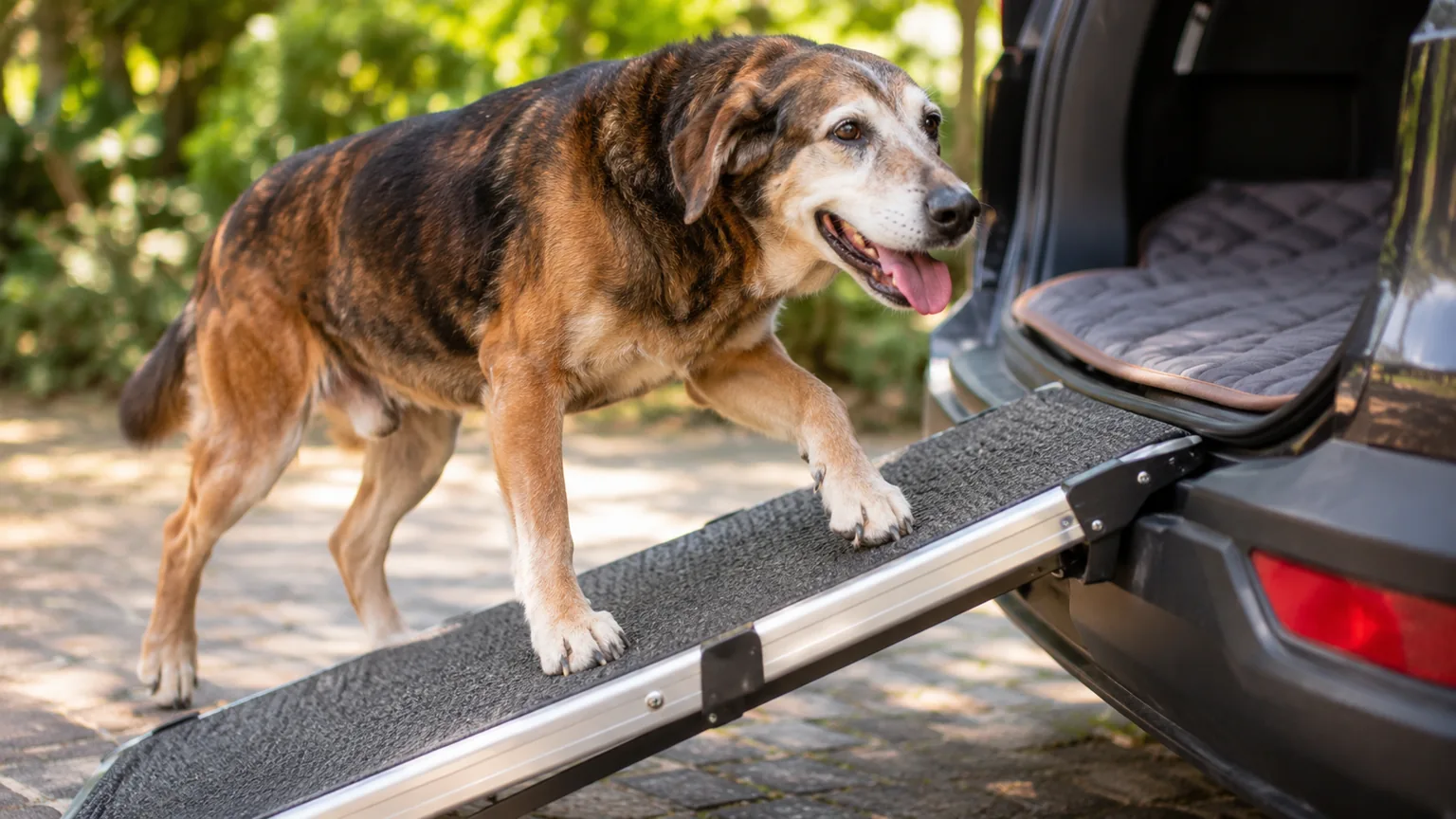
If your dog used to launch onto the bed and now stands at the edge thinking about it, you’re choosing between two fixes: a ramp or a set of pet stairs. For most senior dogs — especially larger breeds or any dog with arthritis — a ramp is the safer choice, because it keeps the back level and spares the joints the repeated impact of stepping up and down. Stairs still have their place, though, and the right pick depends on your dog’s size, your space, and how your dog actually moves.
I’m a dog owner who’s set up ramps for two stiff old dogs, not your vet. If your dog is suddenly struggling to climb when they weren’t before, that’s worth a vet visit — it’s often treatable pain, not just age.
The honest short answer
- Ramp — best for big dogs, long-backed breeds (dachshunds, corgis), arthritis, or any dog who lands hard. It distributes effort smoothly and protects the spine and elbows.
- Stairs — fine for small, light dogs with only mild stiffness and good balance, and when you simply don’t have floor space for a ramp.
If you’re on the fence, go ramp. The failure mode of stairs is a dog who hesitates, slips, or jumps the last step — and a bad landing on old joints is exactly what you’re trying to prevent.
How they compare
| Ramp | Stairs | |
|---|---|---|
| Joint impact | Low — smooth, level climb | Higher — repeated step-up/step-down |
| Best for | Large/arthritic/long-backed dogs | Small, light, mildly stiff dogs |
| Footprint | Longer, needs clear floor | Compact |
| Learning curve | Slightly longer | Usually quick |
| Risk | Can be steep if too short | Missed step / jump off the top |
What to look for in a ramp
- A gentle slope. Length matters more than anything: more length = lower angle = easier on joints. For a car, look for 5–7 feet.
- A truly non-slip surface. A high-traction surface (not slick plastic) is what makes a dog trust it. This is the same reason traction on slippery floors helps a wobbly senior everywhere else in the house.
- Side rails or raised edges so a dog with iffy balance can’t walk off the side.
- A weight rating above your dog’s weight, and a folding design if it’s for the car.
Our picks
PetSafe Happy Ride Folding Dog Ramp
A well-proven, lightweight folding ramp for cars and SUVs — high-traction surface, side rails, and a sensible slope. The easy default for most seniors.
Alpha Paw PupStep Plus Stairs (small dogs)
If your dog is small and the issue is just the couch or bed, these cushioned foam stairs are a compact, gentle option with a washable cover.
Getting your dog to use it
New equipment is only as good as your dog’s willingness to step on it. Lay the ramp flat on the ground first, walk your dog across it for treats, then raise the angle a little at a time over a few days. Keep the sessions short and happy, and never drag or lift a scared dog onto it — one bad first impression can make them refuse it for weeks.
The bottom line
For a big or arthritic senior, a gently sloped, non-slip ramp like the PetSafe Happy Ride is the safer long-term bet for the car and the bedside. For a small, light dog facing nothing worse than the couch, cushioned stairs do the job in less space. Either way, pair it with a supportive orthopedic bed and a daily joint supplement, and you’ve taken the three biggest impacts off your dog’s day.
Prices and availability change — Amazon shows the current price when you click through.
Frequently asked questions
Are ramps or stairs better for senior dogs?
For most arthritic or large senior dogs, a ramp is safer — it keeps the spine level and avoids the repeated joint impact of stepping up and down. Stairs can work for small, lighter dogs with mild stiffness and good balance, and they take up less floor space.
Will my dog actually use a ramp?
Most dogs will within a few days if you introduce it flat, lure them across with treats, and never force it. A non-slip surface and side rails make a nervous dog far more willing.
How steep should a dog ramp be?
Aim for a gentle incline — ideally under about 18–25 degrees. A good rule is at least 2 feet of ramp length for every 1 foot of height. The lower the slope, the easier it is on sore joints.