
Grooming an Arthritic Senior Dog Without Stress
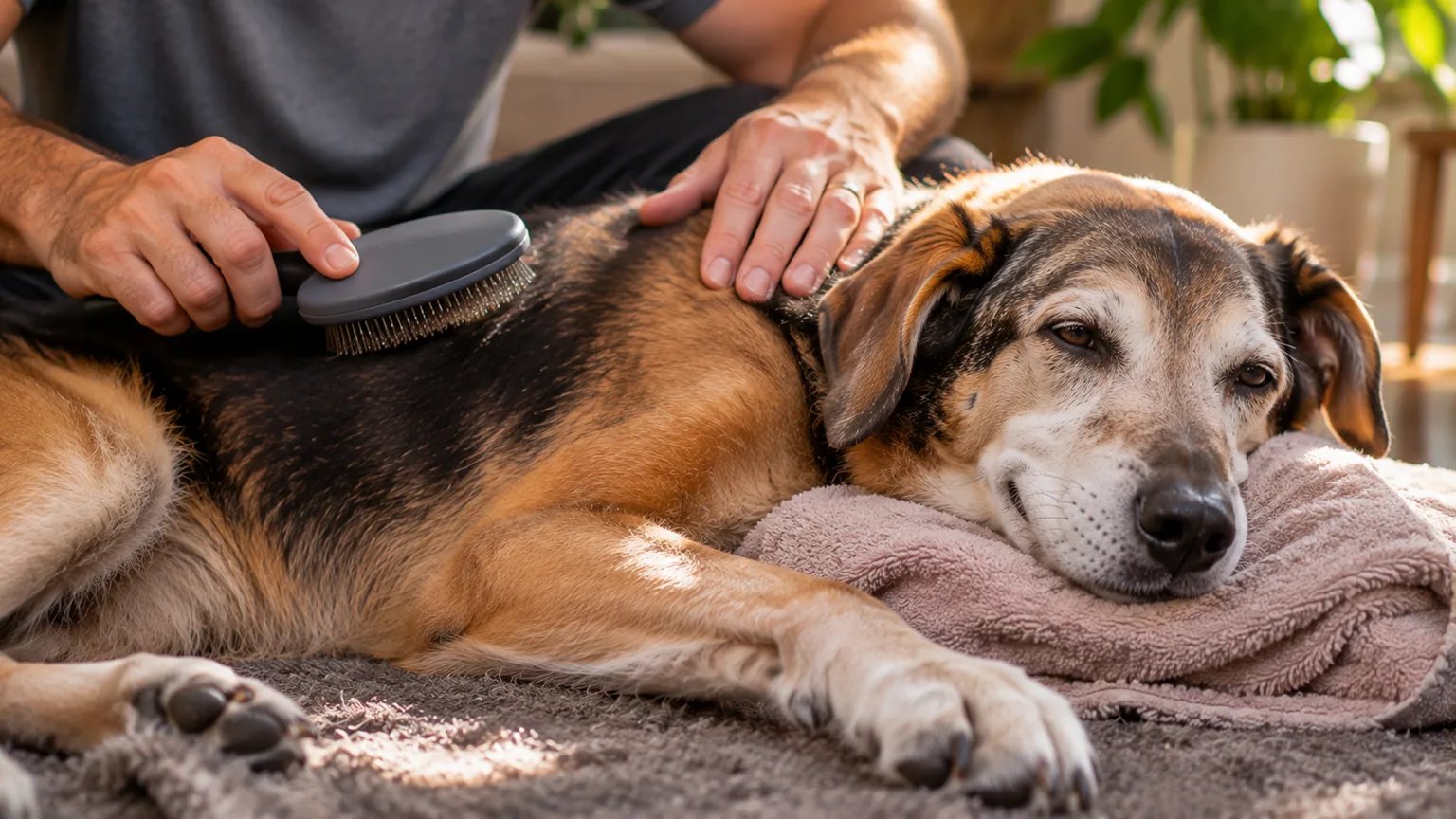
Grooming an old dog is less about looks and more about comfort and dignity. A matted coat pulls at the skin, overgrown nails throw off an already-shaky stance, and a dog who can’t clean themselves well needs you to help them stay fresh. But the arthritis that makes grooming more necessary also makes it harder — standing, twisting, and balancing all hurt. The trick is to groom in short, frequent sessions, let your dog lie down, and work with their sore spots instead of against them.
I’m a dog owner who has gently groomed a stiff old dog through their last years, not your veterinarian or a professional groomer. If your dog cries out, snaps when touched in a spot they used to allow, or has skin that looks wrong, let your vet take a look.
Rethink the setup
Most grooming advice assumes a dog who can stand still on a table. An arthritic senior often can’t — and forcing it turns grooming into something they dread. Instead:
- Come down to their level. Groom on a soft, supportive bed or a non-slip mat on the floor. No lifting, no balancing.
- Let them lie down. You can brush most of a reclining dog. Roll them gently to reach the other side rather than making them stand and turn.
- Support, don’t stretch. Never pull a stiff leg out to reach a paw. Work with the joint where it naturally rests.
Keep sessions short and frequent
A single long grooming session asks a sore body to hold still far too long. Trade it for a few minutes most days: a quick brush before a nap, a couple of nails after dinner. Your dog stays comfortable, the coat never gets ahead of you, and grooming becomes a calm ritual instead of an ordeal.
The senior-dog grooming routine
| Task | How often | Gentle approach |
|---|---|---|
| Brushing | Most days, a few minutes | Soft slicker or rubber brush; follow the lie of the coat |
| Nails | Every 2–3 weeks | One or two at a time; rotary file or clippers + treats |
| Baths | Only when needed | Warm water, non-slip mat, a handheld sprayer, be quick |
| Sanitary trim | As needed | Keep the rear and paw pads tidy for hygiene and grip |
| Ear & eye wipe | Weekly check | Soft damp cloth; look for redness or odor |
The parts that matter most for a senior
Two jobs do more for comfort than a pretty coat ever will. Nails: long nails make a dog slip and change how they stand, loading already-painful joints — keeping them short directly helps traction and mobility. Hygiene around the rear and paws: a stiff dog can’t twist to clean themselves, so a tidy sanitary trim and regular wipe-downs prevent sores and matting where it’s hardest for them to reach.
When to call in help
There’s no shame in handing this off. A mobile groomer who comes to the house spares your dog a stressful car ride and waiting room, and many are experienced with frail seniors. For nails specifically, a vet tech can do them quickly and safely. Watch your dog’s comfort as the measure of success — clean enough and comfortable beats show-ready every time.
The bottom line
For an arthritic senior, grooming is comfort care. Bring it down to their level, keep sessions short and frequent, prioritize nails and hygiene over appearance, and never force a sore joint to move in a way it doesn’t want to. Done gently, grooming becomes one more quiet way you keep your old dog comfortable and dignified — and a good moment to check in on how their body is holding up overall, which pairs well with a monthly wellness once-over.
Frequently asked questions
How often should I groom an arthritic senior dog?
Little and often beats long sessions. A few minutes of brushing most days, nails every 2–3 weeks, and baths only when truly needed. Short, frequent grooming is far gentler on sore joints than an occasional marathon session.
My senior dog hates having their nails done. What can I do?
Long nails are painful and worsen slipping, so they matter. Trim or file just one or two nails per session, pair it with treats, and consider a rotary file (many dogs tolerate it better than clippers). If anxiety is high, ask your vet or a mobile groomer for help.
Can I groom a senior dog on the floor instead of a table?
Yes, and for many stiff dogs it's kinder — no lifting, no balancing on a hard surface. Work on a non-slip mat or soft bed at their level, and let them lie down for most of it.