
Early Signs of Common Senior Dog Diseases (and When to Call the Vet)
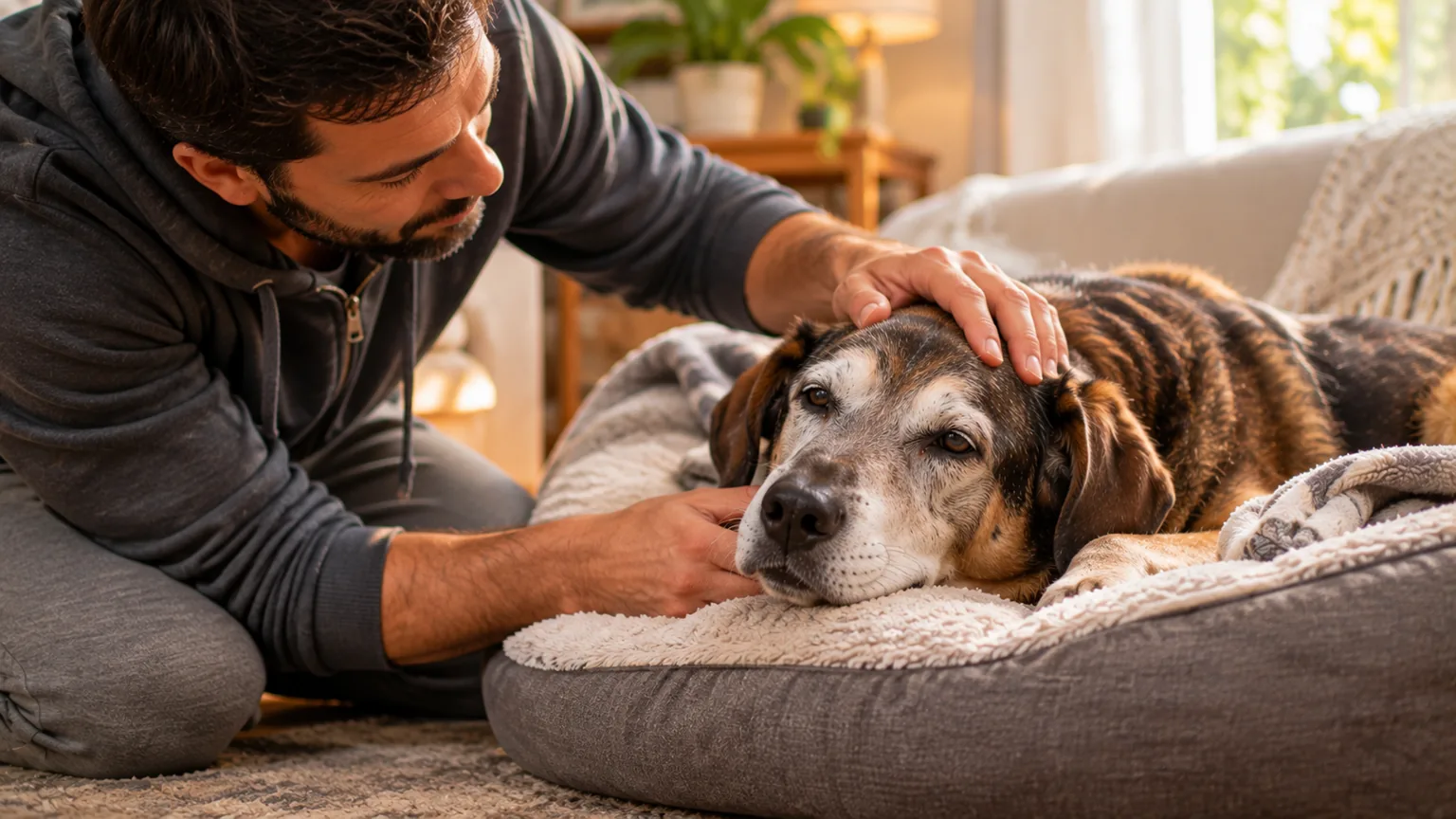
The hardest thing about illness in an old dog is that the early signs look exactly like aging. Drinking a bit more, slowing down, sleeping harder, a little weight creeping off — it’s easy to file all of it under “he’s just getting old.” But many of the diseases common in senior dogs are very manageable if they’re caught early, and the window for catching them is often hidden in those small, dismissible changes. Knowing which changes point to a treatable illness — and which ones mean call the vet now — is one of the most protective things you can do for an aging dog.
I’m a dog owner who has learned to watch an old dog closely, not your veterinarian. This is a guide to noticing, not diagnosing. Anything on this page is a reason to call your vet, never a substitute for one.
Why “just old” is a trap
Aging itself isn’t a disease. When a senior dog genuinely declines, there’s usually a reason — and often a treatable one. The dogs who do best are the ones whose owners noticed a change early and got it checked, before a quiet problem became a crisis. That starts with knowing the patterns.
The common ones and their early signs
| Disease | Early signs that get dismissed |
|---|---|
| Kidney disease | More thirst and urination, mild weight loss, pickier appetite, bad breath |
| Diabetes | More thirst and urination, hungry but losing weight, cloudy eyes |
| Cushing’s disease | More thirst, pot-belly, thinning coat, panting, more accidents |
| Heart disease | A new cough (esp. at night), tiring on walks, faster breathing at rest |
| Hypothyroidism | Weight gain, low energy, dull or thinning coat, seeking warmth |
| Dental disease | Bad breath, chewing on one side, dropping food, pawing at the mouth |
| Cancer | A new or growing lump, non-healing sore, unexplained weight loss, low energy |
Notice how many start with more drinking and peeing. That single change is one of the most useful signals an old dog gives you — it shows up early in kidney disease, diabetes, and Cushing’s, all of which respond far better to early treatment.
A simple way to track it
You don’t need to be a vet to catch these — you need a baseline. Once you know what’s normal for your dog (how much they drink, their weight, their energy, their appetite), a change stands out. A quick monthly home once-over makes those changes obvious instead of creeping up on you. Pair it with the twice-a-year senior vet visits and bloodwork that catch what you can’t see from the outside.
Call the vet promptly if you see…
Some changes shouldn’t wait for the next check-up:
- A clear, lasting jump in thirst or urination
- Sudden or steady weight loss you didn’t plan
- Not eating for more than a day, or a sharp drop in appetite
- Labored breathing, or a cough that won’t settle
- Repeated vomiting or diarrhea
- Collapse, fainting, or new back-leg weakness
- A lump that grows fast, or a sore that won’t heal
Many of these overlap with the quiet signs of pain — and when you’re unsure whether something’s “worth it,” that uncertainty is exactly what a phone call to the vet is for.
The bottom line
Old age isn’t an illness, and most of what slows a senior dog down has a name — and often a treatment. Learn the early signs, keep a simple baseline so changes stand out, and don’t talk yourself out of a vet call when something shifts. Catching a problem in the drinking-a-bit-more stage, rather than the something’s-very-wrong stage, is what buys an old dog more good, comfortable time.
Frequently asked questions
What are the most common diseases in senior dogs?
The ones vets see most in aging dogs are kidney disease, heart disease, diabetes, Cushing's disease, hypothyroidism, arthritis, dental disease, and various cancers. Most share early signs that are easy to brush off as 'just getting old' — which is exactly why they're missed.
What changes in an old dog should I never ignore?
A big change in thirst or urination, sudden weight loss, loss of appetite for more than a day, labored breathing or a persistent cough, repeated vomiting or diarrhea, collapse, or a fast-growing lump. Any of these warrants a prompt vet call, whatever your dog's age.
Is increased thirst in an older dog serious?
It can be. A clear, sustained increase in drinking and urination is one of the most important early signs of kidney disease, diabetes, and Cushing's — all very treatable when caught early. It's worth a vet visit rather than a wait-and-see.