
Dog Vitamins vs. Supplements: What a Senior Dog Actually Needs
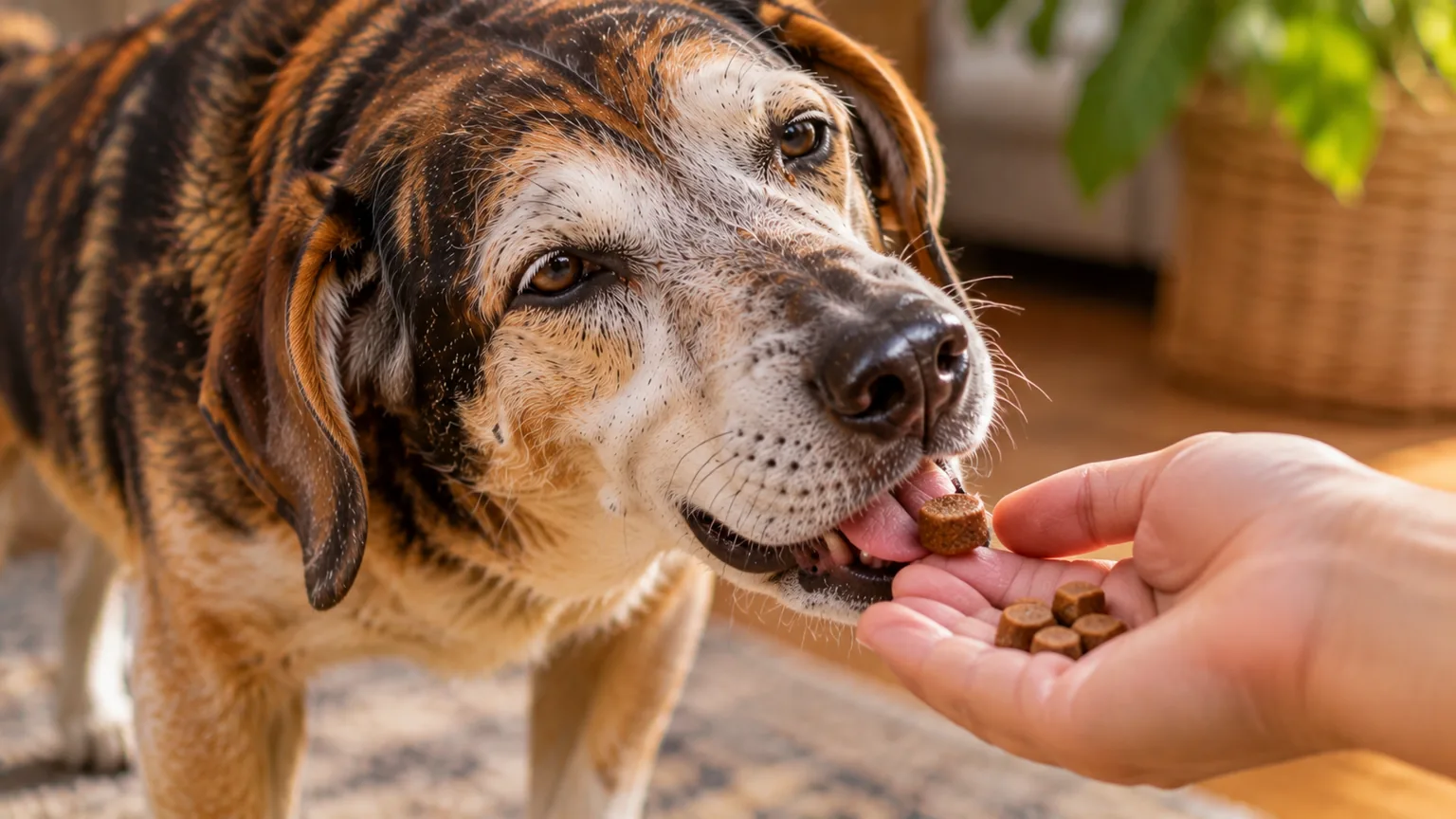
Walk down the pet-supplement aisle and it’s easy to feel like you’re failing your old dog if the cart isn’t full. Vitamins, joint chews, skin oils, “senior blends” — it’s a lot, and most of it is marketing. The truth is simpler and cheaper than the shelf suggests. Most senior dogs on a complete commercial diet don’t need a daily multivitamin; what helps is one or two targeted supplements aimed at your dog’s actual problems — usually joints, and often omega-3s.
I’m a dog owner who has wasted money on things my dog didn’t need, not your veterinarian. Supplements can interact with medications and conditions, so make your vet the final word before adding anything — especially for a senior on medication.
Vitamins vs. supplements — the real difference
They get lumped together, but they do different jobs:
- Multivitamins aim to fill nutritional gaps — the vitamins and minerals a diet might be missing.
- Supplements target a specific function — joints, skin, digestion, anxiety.
That distinction matters because of one fact: complete commercial dog foods are already formulated to meet your dog’s vitamin and mineral needs. Pile a multivitamin on top and you’re usually spending money for nothing — and some vitamins and minerals are genuinely harmful in excess.
Who actually needs a multivitamin
Not most dogs. A multivitamin makes sense mainly for:
- Dogs on a home-cooked or unbalanced diet (where gaps are real).
- Dogs with a specific deficiency your vet has diagnosed.
If your senior eats a good complete food, your money is better spent on a targeted supplement than a broad vitamin.
The supplements worth considering for a senior
| Supplement | Helps with | Worth it for a senior? |
|---|---|---|
| Glucosamine / chondroitin / MSM | Joints, stiffness, mobility | Often yes — the big one for seniors |
| Omega-3 fish oil (EPA/DHA) | Joints, skin/coat, brain, heart | Frequently yes |
| Probiotics | Digestion, loose stools | If they have gut issues |
| Multivitamin | General nutrient gaps | Usually no, on a complete diet |
If you add just one thing for a stiff older dog, make it a joint supplement — it’s the best-supported for the problem seniors face most. Omega-3s are a strong second, pulling double duty for joints, skin, and the aging brain.
How to add one sensibly
Pick the supplement that targets your dog’s biggest issue — don’t start three at once, or you’ll never know what’s working. Give it a fair trial: most take 6 to 8 weeks to show a difference (jot down whether your dog moves or feels better). And run it past your vet first, especially if your dog takes medication — “natural” doesn’t mean “no interactions.”
The bottom line
Skip the guilt and the overflowing cart. A senior dog on a complete diet rarely needs a multivitamin; what helps is a targeted supplement for a real problem — most often a joint formula, often omega-3s. Choose one, give it two months, keep your vet in the loop, and judge it by how your dog actually moves and feels — not by how many bottles are on the shelf.
Frequently asked questions
What's the difference between dog vitamins and supplements?
A multivitamin aims to fill gaps in nutrients (vitamins and minerals). A supplement targets a specific issue — joints (glucosamine), skin and coat (omega-3s), digestion (probiotics). Most dogs on a complete commercial diet don't need a multivitamin, but many seniors benefit from one or two targeted supplements.
Does my senior dog need a daily vitamin?
Usually not, if they eat a complete, balanced commercial dog food — that's already formulated to meet their vitamin needs, and extra can do harm. Vitamins make more sense for dogs on home-cooked diets or with a specific deficiency your vet has identified. Ask before adding one.
What supplements are actually worth giving a senior dog?
The best-supported for seniors are joint supplements (glucosamine, chondroitin, MSM), omega-3 fish oil (joints, skin, brain), and sometimes probiotics for digestion. Start with the one that targets your dog's biggest issue, give it 6–8 weeks, and involve your vet.